Fairchild FAN3268 Data Handbook
Summary
The FAN3268 is a dual 2A low-voltage gate driver designed to manage bridge configurations in power conversion circuits. It efficiently drives both high-side PMOS and low-side NMOS MOSFETs, making it ideal for demanding motor control systems and buck converters operating up to 18V. This manual provides comprehensive technical details, including the device's thermal characteristics, pin definitions, enabling features, and guidelines crucial for power electronics engineers implementing reliable switching solutions.
Page 1 Text Content
3268 — 2A -V ltag e P -N rid e D river
July 2012
FAN3268 2A Low-Voltage PMOS-NMOS Bridge Driver
Features Description
4.5V to 18V Operating Range The FAN3268 dual 2A gate driver is optimized to drive a high-side P-channel MOSFET and a low-side N-channel
Drives High-Side PMOS and Low-Side NMOS in
MOSFET in motor control applications operating from a
Motor Control or Buck Step-Down Applications
voltage rail up to 18V. The driver has TTL input Inverting Channel B Biases High-Side PMOS thresholds and provides buffer and level translation Device Off (with internal 100kΩ Resistor) when functions from logic inputs. Internal circuitry provides an VDD is below UVLO Threshold under-voltage lockout function that prevents the output switching devices from operating if the VDD supply
TTL Input Thresholds
voltage is below the operating level. Internal 100kΩ
2.4A Sink / 1.6A Source at VOUT=6V resistors bias the non-inverting output low and the
inverting output to VDD to keep the external MOSFETs
Internal Resistors Turn Driver Off If No Inputs
off during startup intervals when logic control signals
Miller Drive™ Technology
may not be present.
8-Lead SOIC Package
The FAN3268 driver incorporates Miller Drive™ Rated from –40°C to +125°C Ambient architecture for the final output stage. This bipolar- MOSFET combination provides high current during the Miller plateau stage of the MOSFET turn-on / turn-off
Applications
process to minimize switching loss, while providing rail- Motor Control with PMOS / NMOS Half-Bridge to-rail voltage swing and reverse current capability.
Configuration
The FAN3268 has two independent enable pins that Buck Converters with High-Side PMOS Device; default to on if not connected. If the enable pin for non- 100% Duty Cycle Operation Possible inverting channel A is pulled low, OUTA is forced low; if the enable pin for inverting channel B is pulled low,
Logic-Controlled Load Circuits with High-Side
OUTB is forced high. If an input is left unconnected,
PMOS Switch
internal resistors bias the inputs such that the external MOSFETs are off.
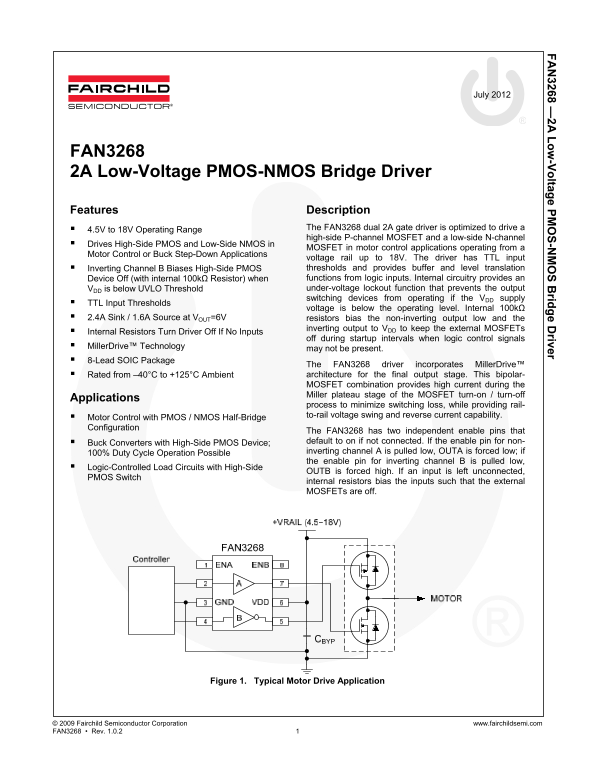
Figure 1. Typical Motor Drive Application
© 2009 Fairchild Semiconductor Corporation www.fairchildsemi.com FAN3268 • Rev. 1.0.2 1
Page Summary Contents For Fairchild FAN3268 Data Handbook
Manual Details
| Brand | Fairchild |
|---|---|
| Pages | 16 |
| File Size | 1.08 MB |
| Published | June 01, 2026 |
Enter the captcha to get the download link:

Frequently Asked Questions
What is the operating voltage range for this bridge driver?
It operates over a high-side P-channel MOSFET/low-side N-channel MOSFET combination with an operating range of 4.5V to 18V.
How does the device compensate for switching losses?
It incorporates MillerDrive™ Technology, which provides high current during the Miller plateau stage to minimize switching loss and provide rail-to-rail voltage swing.
What happens if the supply voltage drops below the UVLO threshold?
An under-voltage lockout (UVLO) function is active; it prevents output switching devices from operating if the VDD supply voltage falls below the set threshold.
Can this device manage motor control or buck converter applications?
Yes, it is suitable for motor control with a PMOS/NMOS half-bridge configuration and for use in Buck Converters with High-Side PMOS setups.