ABB Data Sheet - FPD150 160 Differential Pressure – Primary Flow Element Orifice Plates and Orifice Flange Unions
Summary
Monitor liquid, gas, or steam flowrate with high-precision orifice plates and flange unions designed for differential pressure measurement. This manual provides comprehensive technical details on diverse plate configurations—including concentric, eccentric, conical, and quarter-circle types—engineered for varying fluid viscosities and solids content. Ideal for process engineers and industrial clients requiring reliable, standardized flow metering solutions compliant with ISO and ASME standards in critical piping systems.
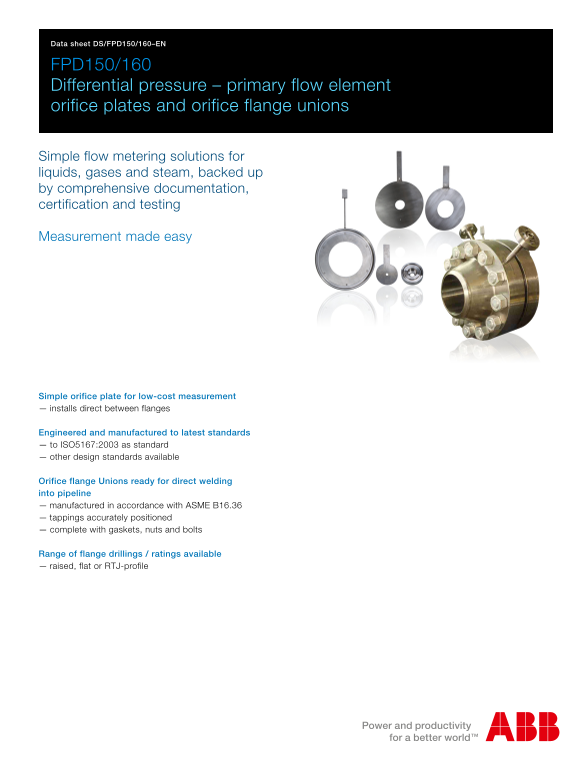
Page 1 Text Content
Data sheet DS/FPD150/160–EN
FPD150/160 Differential pressure – primary flow element orifice plates and orifice flange unions
Simple flow metering solutions for liquids, gases and steam, backed up by comprehensive documentation, certification and testing
Measurement made easy
Simple orifice plate for low-cost measurement installs direct between flanges
Engineered and manufactured to latest standards to ISO5167:2003 as standard other design standards available
Orifice flange Unions ready for direct welding into pipeline manufactured in accordance with ASME B16.36 tappings accurately positioned complete with gaskets, nuts and bolts
Range of flange drillings / ratings available raised, flat or RTJ-profile
Page Summary Contents For ABB Data Sheet - FPD150 160 Differential Pressure – Primary Flow Element Orifice Plates and Orifice Flange Unions
Manual Details
| Brand | Element |
|---|---|
| Pages | 20 |
| File Size | 456.15 KB |
| Published | June 03, 2026 |
Enter the captcha to get the download link:

Frequently Asked Questions
What plate design should be used when measuring liquids with suspended solids?
Use an Eccentric square edge plate because its bore is positioned adjacent to the pipe wall, allowing solids to pass freely.
Can I use a concentric orifice plate for dirty liquids or gases containing solids?
No, solids can build up in front of the plate on concentric types, which compromises accuracy and may cause blockages.
What criteria determine the tapping location for differential pressure measurement?
Taps must generally be placed 25.4 mm (1 inch) from the upstream and downstream faces relative to the primary flow element face.
Which plate is recommended for measuring low-velocity or high-viscosity clean liquids?
Conical entrance plates or quarter-circle plates are suitable, as they maintain accuracy down to relatively low Reynolds Numbers.